

LOVE
I’ve been reading The Vital Spark by Lisa Marchiano and really enjoying it. It’s very similar in tone to Women Who Run With the Wolves, if you enjoy that.
The mythic banishment of Lilith speaks to a universal truth. There are qualities such as kindness, empathy, and agreeableness that can help us get and stay connected with each other, and there are fiery qualities such as anger, shrewdness, and forcefulness that can help us get and stay connected to ourselves.”
Everybody is dealing with how much of their own aliveness they can bear and how much they need to anesthetize themselves,” according to the psychoanalyst Adam Phillips. Staying cut off from our vitality is a form of anesthesia.
Why do high agency people put themselves in low agency situations? I was puzzling over a friend of mine who is incredibly capable but consistently chooses to be in relationships where their competence is just… not useful. Then I realized I have my own version of this. I suspect that many of us do. It’s a strange paradox—you know you’re able so you take on difficulty, and you can’t quite make the connection that you’ve consciously chosen to be in a situation where you have little to no leverage. We all choose the ways we are trapped and the ways we are free, and I’m starting to believe a certain type of high-functioning person is irresistibly drawn to making themselves artificially low-functioning. Mirages and oases look similar for a reason, in other words.
Most people don’t have a type. I find this to be very true in matchmaking: the people most likely to find awesome partners they’re happy with tend to have about two or three things they really care about, and they don’t sweat the details at all.
But regardless of how you meet people, the crucial pieces are: Find someone you think is reasonably attractive and then hang out with them at least three times, doing things together that will inspire deep, connection-building interactions (such as playing a conversation card game and maybe answering the “36 Questions That Lead to Love” from that old New York Times essay). The person you spark with might be too tall or too short, or be a dog person to your cat person, or have an extremely boring job. Even so: They might be just your type.
TECHNOLOGY
Dwarkesh profile in NYT!
 dylan matthews 🔸@dylanmatt"Almost 69% of US mushroom production occurs in the borough of Kennett Square, PA. It is a small town of about 6000 people, but mushroom-growing facilities around town produce almost 451 million pounds of mushrooms annually" sftw.substack.com/p/the-case-of-…
 6:25 PM · Apr 27, 2026 · 44.7K Views22 Replies · 71 Reposts · 854 Likes
 Taylor Lorenz@TaylorLorenz@pangramlabs From the data, it seems like the more analytical the content is, the more it’s likely to be generated by AI. People don’t want to get cultural commentary, musings about restaurants, travel, or music from AI, and these categories are heavily built around personal, human voices.
 9:56 PM · Apr 27, 2026 · 1.27K Views1 Reply · 10 Likes
I just want to take a moment to solemnly promise that no part of Bookbear Express will ever be AI generated. You’re here for the artisanal emotional angst, and I plan to deliver :)
Kevin Kelly on uncertainty.


CULTURE
The Japanese designers reshaping menswear. I, too, love Auralee and have a take on Evan Kinori and shop at C’H’C’M’ and generally know a lot about menswear. Mostly because I am a control freak. I will not be elaborating.
I did not know about the concept of the kunstlerroman! But it is relevant to me!
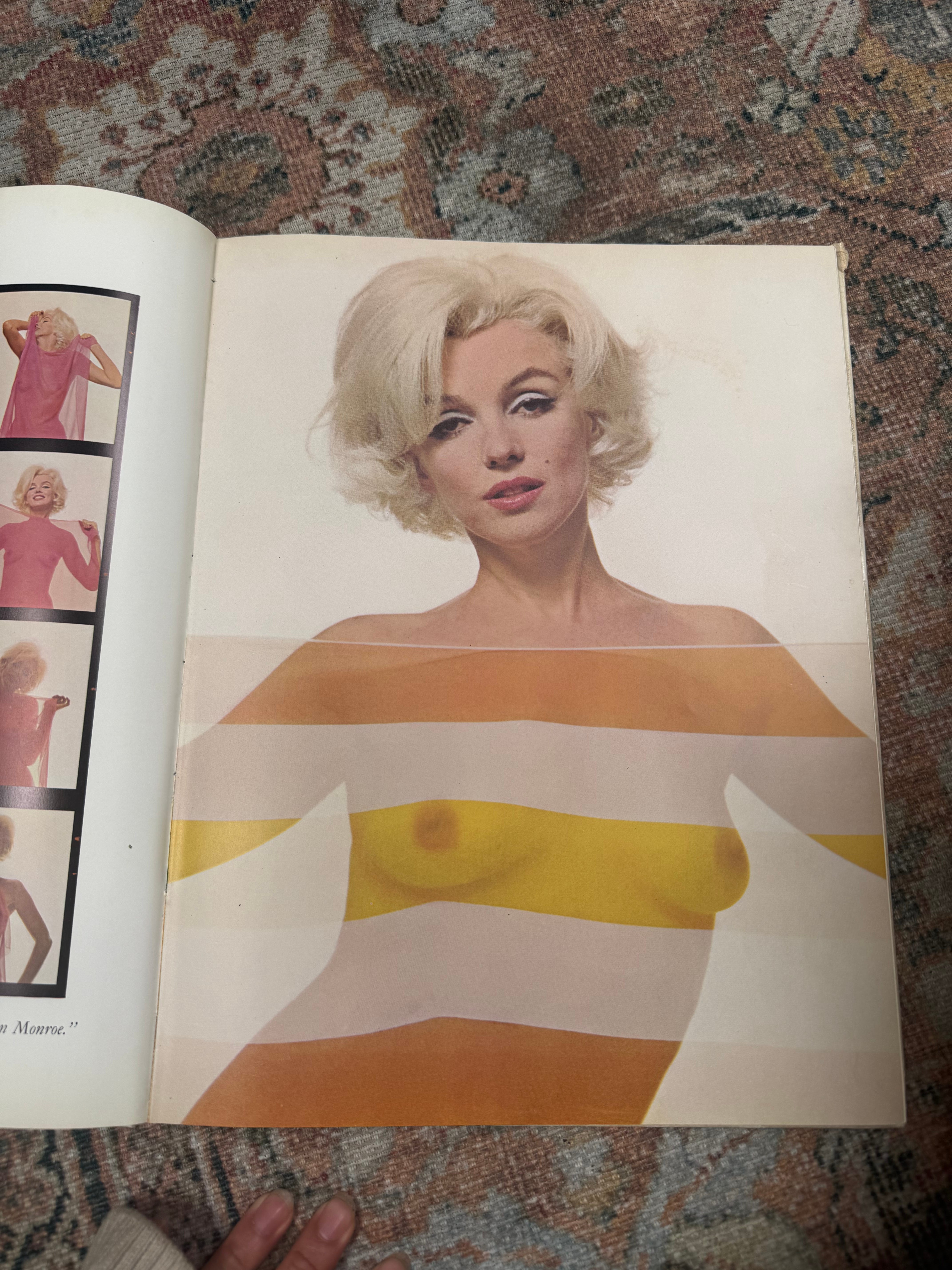
On Marilyn Monroe. On my coffee table I have a copy of the 1962 Eros volume that contains The Last Sitting (the last pictures taken of Marilyn Monroe before she died). This essay does a great job of describing the photos, which are beautiful, strange and sad.
In the pictures, Marilyn sports a peroxide bouffant and modish makeup—white eyeshadow with a heavy crease line, a colorless lip. Monroe was drinking heavily during the shoot, and her eyes bear a glazed expression, gauzy and vacant. She wears costume jewelry, scarves, and little else. Modern sensibilities cast these photos in a different light—how ethical is it to take nude pictures of someone so drunk?—as does the fact that Marilyn crossed out many of the images on the contact sheet, drawing great big red Xs over photos where she looked tired, or where the camera captured the scar that ran across her abdomen from an endometriosis surgery. But the portraits are transfixing, precisely because they show her famous fragility on display. Her skin is papery and loose; she has deep lines at the corners of her mouth; drugs and grief are aging her hard. And still, she is magnetic, radiant.
I have that quote about aliveness highlighted in my copy. I talk about it in terms of the Devil card in the tarot. About how much aliveness we can bear (bare!) and the ways in which we numb out. (As well as thinking about it in semi regular at cycles myself.)